

Quiet, careful preventive care that keeps you out of the chair.
Cleanings, exams, fluoride, sealants, and early-warning oral cancer screening — the visits that quietly prevent the bigger problems we'd rather you never have.
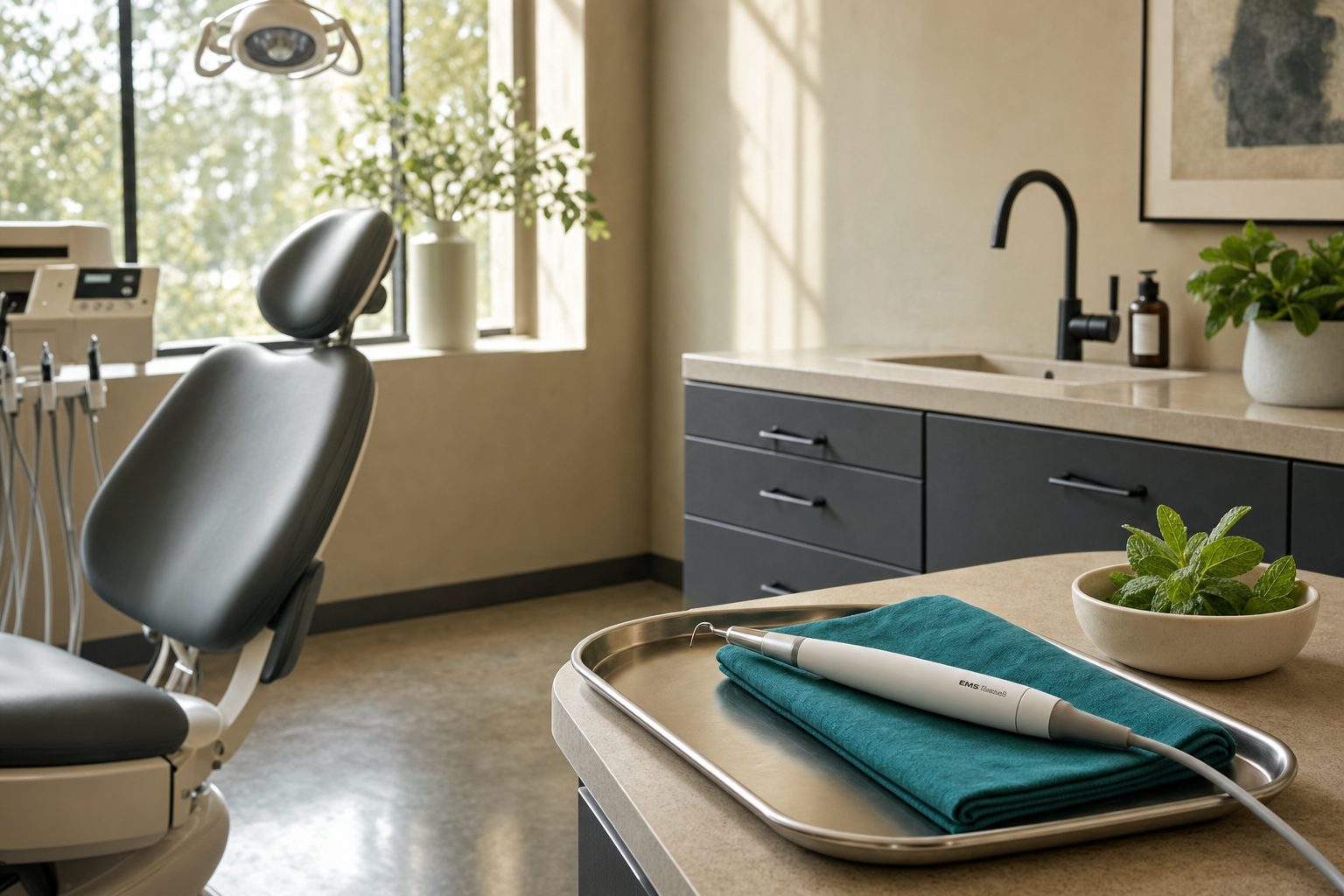
The visit that prevents the next ten visits.
Most of the expensive, painful dentistry we do could have been avoided by a calmer, more attentive visit eighteen months earlier. That's the whole case for preventive care. Twice a year — sometimes three times for higher-risk patients — we want to see you for a thorough cleaning, an honest exam, and the smallest possible intervention before any small problem becomes a big one.
Our hygiene visits at District Dentistry in Charlotte are intentionally unhurried. We give a full hour to most adult cleanings because rushing is how cavities and gum issues get missed. Your dentist personally reviews each set of X-rays, examines soft tissues for early signs of oral cancer, checks your bite, and explains anything we see in plain language.
If we find a small cavity, we say so calmly and give you the size, the recommendation, and the price in writing. If we find nothing, we say that too — we don't invent work. Many of our preventive patients go years between any restorative treatment, and that's exactly the goal.
What a thorough hygiene visit actually includes.
Our preventive visit is the same whether you come once a year or every three months — only the depth and frequency change.
Health update and screening
We review any changes since your last visit — medications, sensitivities, life stress, sleep, anything that affects the mouth — and screen blood pressure where appropriate.
Imaging only when needed
We use modern digital sensors that emit a fraction of older film X-ray radiation, and we only image when the schedule and your risk profile warrant it.
Cleaning and polish
A full hour for most adults. We remove tartar, polish gently, and use ultrasonic scaling where it's more comfortable than hand scaling.
Exam and oral cancer screen
Your dentist examines every tooth, your gums, your bite, and your soft tissues. We screen for early signs of oral cancer at every visit — it takes 90 seconds and saves lives.
Plan and education
If we recommend anything — a filling, a sealant, an electric brush — we explain why, what it costs, and whether it's actually urgent.
Why families pick us for routine care.
Most dental offices do cleanings. Few make the visit feel calm enough that you actually look forward to coming back.
Unhurried hour-long visits
We don't double-book hygiene chairs. Your full hour is yours — questions included.
Same dentist, same hygienist
You see the same small team every visit. They remember you, your history, and your preferences.
Honest about treatment
If we don't see anything that needs work, we don't invent any. Many patients leave with just a polish.
Family-friendly
Adults, teens, and kids ages 4 and up — we set a calm tone so anxious patients can settle in.
Preventive care questions.
Whether you've been every six months for decades or are coming back after a long gap, the visit is the same — careful, calm, and judgment-free.
How often should I really have a cleaning?
Most adults benefit from every six months. Patients with a history of gum disease, diabetes, smoking, or heavy coffee/tea staining often do better at three or four months. We tell you what's actually right for your mouth.
I haven't been to a dentist in years. Will you judge me?
No — and we hear that question constantly. Most patients who've been away a while expect the worst and leave surprised. We meet you where you are, build a plan, and start with the most important thing first.
Do you accept dental insurance?
We accept most major PPO plans and file claims for you. Even out-of-network patients usually get strong reimbursement. We also offer an in-house wellness plan that bundles cleanings, exams, and discounts for patients without insurance.
Are dental X-rays safe?
Modern digital dental X-rays expose you to a small fraction of older film radiation — comparable to a few days of normal background radiation. We only take them when needed, and pregnant patients can defer routine X-rays without issue.
My gums bleed when I brush — is that bad?
Bleeding gums are almost always a sign of early gum inflammation (gingivitis), which is reversible with a deep cleaning and improved home care. Untreated, it progresses to periodontitis, which is not fully reversible. So yes — get it looked at.