

Modern root canals — comfortable, quick, and save the tooth.
Root canal therapy today is nothing like its reputation. It removes the pain, saves your natural tooth, and is usually finished in one or two appointments at our Charlotte office.
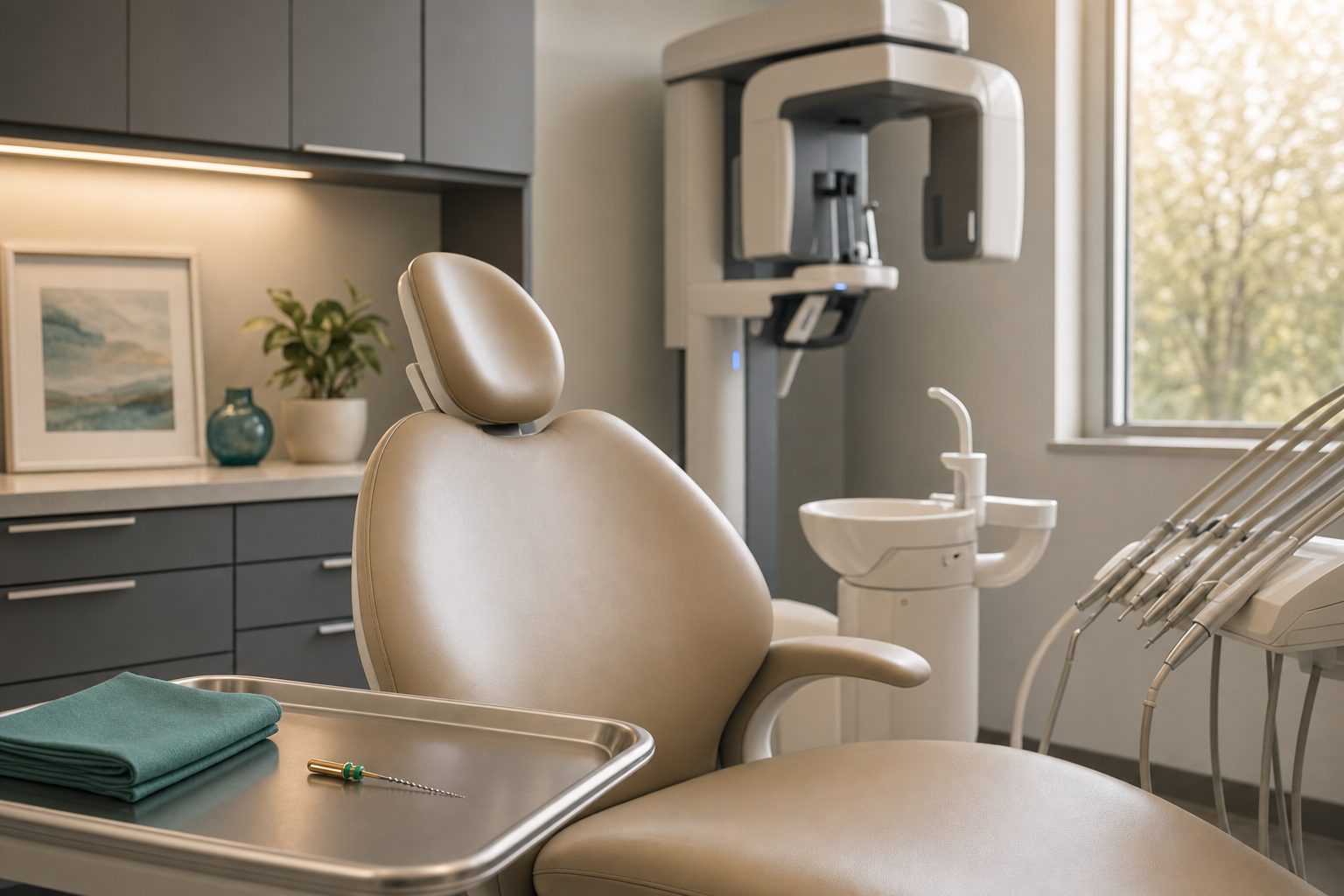
What a root canal actually does.
When the nerve inside a tooth becomes infected or damaged — usually from a deep cavity, a crack, or repeated trauma — the body can't heal it on its own. The pain becomes constant and sharp. Without treatment, the infection spreads. A root canal removes the damaged nerve, cleans and seals the inside of the tooth, and lets you keep your natural tooth for decades more.
The procedure itself feels a lot like getting a deep filling. With good local anesthetic, modern rotary instruments, and digital imaging, most root canals are finished in 60 to 90 minutes. The famous "root canal pain" people fear is almost always the pain before the procedure — the relief afterward is immediate and dramatic.
We perform straightforward root canals in-house at District Dentistry in Charlotte. For complex cases — re-treatments, severely curved canals, or teeth with unusual anatomy — we partner with a trusted local endodontist and coordinate the follow-up restoration ourselves.
The visit, step by step.
Most patients are surprised by how routine and undramatic the actual visit is.
Diagnosis and imaging
We confirm the tooth is the right candidate with focused testing and a small digital X-ray. Sometimes the tooth that hurts isn't the tooth with the problem — accuracy matters.
Local anesthetic, fully numb
We do not start until the tooth and surrounding tissue are completely numb. If it ever isn't, we stop and adjust — comfort is non-negotiable.
Cleaning the canal
Using fine instruments and irrigation, we remove the damaged nerve tissue and shape the inside of the tooth so it can be sealed cleanly.
Seal and temporary
We seal the canal with a biocompatible material and place a temporary filling. You leave with the pain already gone.
Permanent crown follow-up
Most root-canal-treated teeth need a crown within a few weeks to prevent fracture. We plan that crown at the same office, so there's no handoff.
Why patients trust us with their tooth.
A root canal is mostly a craftsmanship procedure. The difference between a good one and a great one is patience and attention to detail.
Honest about who should do the case
Straightforward cases stay with us. Complex anatomy or re-treatments go to a specialist — and we coordinate everything.
Modern imaging and instruments
Digital X-rays and modern rotary files mean shorter visits, more accurate work, and less post-op discomfort.
One office for everything
We do the root canal, the build-up, and the permanent crown — no shuttling between offices for the same tooth.
Same-day pain relief
Most patients walk out of the appointment with the throb already gone. Some mild soreness for 24 to 48 hours is normal.
Root canal questions.
These are the most common things patients ask us in the consult.
Does a root canal hurt?
Not during the procedure. The tooth is fully numb. What hurts is usually the infection before treatment — and that hurt is gone the moment the canal is cleaned. Mild soreness for a day or two afterward is normal and managed with over-the-counter medication.
How much does a root canal cost in Charlotte?
A general-dentist root canal at our office is typically $850 to $1,400 depending on which tooth (molars have more canals and cost more). A specialist endodontist usually charges $1,200 to $2,000. Most PPO insurance plans cover a significant portion. We always provide a written estimate first.
Why do I need a crown after the root canal?
A treated tooth is structurally weaker and can fracture under chewing forces. A crown protects it and lets it function for decades. Skipping the crown is the most common reason root-canal-treated teeth fail later.
How long will the tooth last?
When the root canal is well-done and the crown is placed promptly, most treated teeth last 20 to 30 years or longer — often the rest of your life. The key is the timely crown and good ongoing hygiene.
Could I just have the tooth pulled instead?
You could. But the natural tooth is almost always the better long-term choice. Replacing a missing tooth with an implant later usually costs more than the root canal plus crown today, and the natural tooth keeps the bone in place and the bite balanced.